“Squat Ass To Grass!”
”Bench Bar To Chest!”
”Deadlift From The Floor!”
”Everyone should do chin ups!”
I fell into believing these statements when I first started training.
And you know what it led to?
Frustration. Rubbish results. Pain. Injury.
In fact, these arbitrary rules were responsible for a lot of my shoulder and hip pain over the years.
Why?
Because “full range of motion” is a myth.
More specifically…
What you think is “full ROM”, actually isn’t full ROM for you. Ie – just because you’ve been told to squat “ass to grass” doesn’t mean it’s beneficial for you, or that you should blindly follow that advice.
See, here’s the thing:
You are unique. Your anatomy is unique. Your bone structure is unique… and naturally, it makes sense that your range of motion would be different to someone else’s too, right?
Now I get it.
All these years, you’ve been told one thing… and now here I am saying the opposite – that not everyone should do chin ups, squat ass to grass, bench bar to chest, or deadlift from the floor.
It’s confusing right?
In todays email, we’re going to cover WHY some people shouldn’t do the highlighted points above…
And if you read this letter to the end,
I promise it’ll help you:
• Reduce nagging aches + pains
• Avoid progress-destroying injury
• Make your workouts feel amazing
• Achieve elite results in minimal time
Sound good? Great. Let’s dive in!
#1) THE CHIN UP
Did you know most people can’t get the arms to 180º (vertically) overhead? But despite this, they continue to do chins ups, smash their joints into unnatural positions… And they end up getting permanent joint damage years down the line
(That sucks)
Remember this image below in my previous email?

It shows exactly what I’ve just explained. Vertical is impossible for me, which means chin ups are impossible for me, too.
So… how about you?
Here’s a mobility test I do with all my clients. Give it a go. If you can get your arms to vertical great. But if not? Ditch the chin ups, and customise the exercise ROM to what you have available.
Ps. The goal here is to keep your elbows pointing forward at the top – if you don’t, it invalidates the test (and it’s why I achieve more range compared to the photos above)
#2) THE BENCH PRESS
”Bar to chest” is a very popular cue, isn’t it?
Truth is, it’s AWFUL advice if:
• You have long arms
• A flat sternum angle
• A narrow rib cage
Why? Because towards the bottom, the pec struggles to work, and that places a LOT of stress on your shoulder joint (one of the most popular injuries I’ve seen over the past decade).
This also means the flat bench will NOT help you grow your chest if you have a narrow rib cage or flat sternum angle.
See how different the two shoulder positions are below?
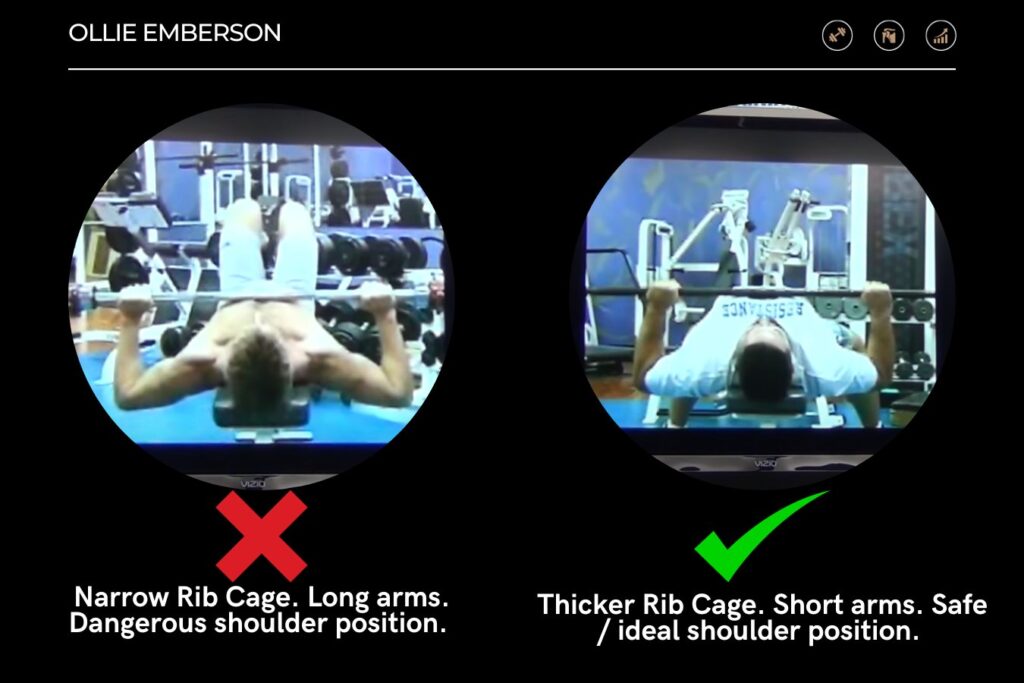
If you want to learn more about this, click below to watch the video (back in the day, this video helped me reduce injury risk, get better results… and it’ll completely blow your mind) 👇
#3) THE SQUAT
In my 10 years training, and 1000s hours with clients, you’d be amazed at how many people can not squat ass to grass.
”Oh, you just need to improve mobility!”
Not so fast…
Because some people’s hip joints physically STOP them from being able to squat ass to grass.
And again:
Trying to squat ass to grass when you’re not built for it can result in hip / labrum damage, pain during workouts and injury…
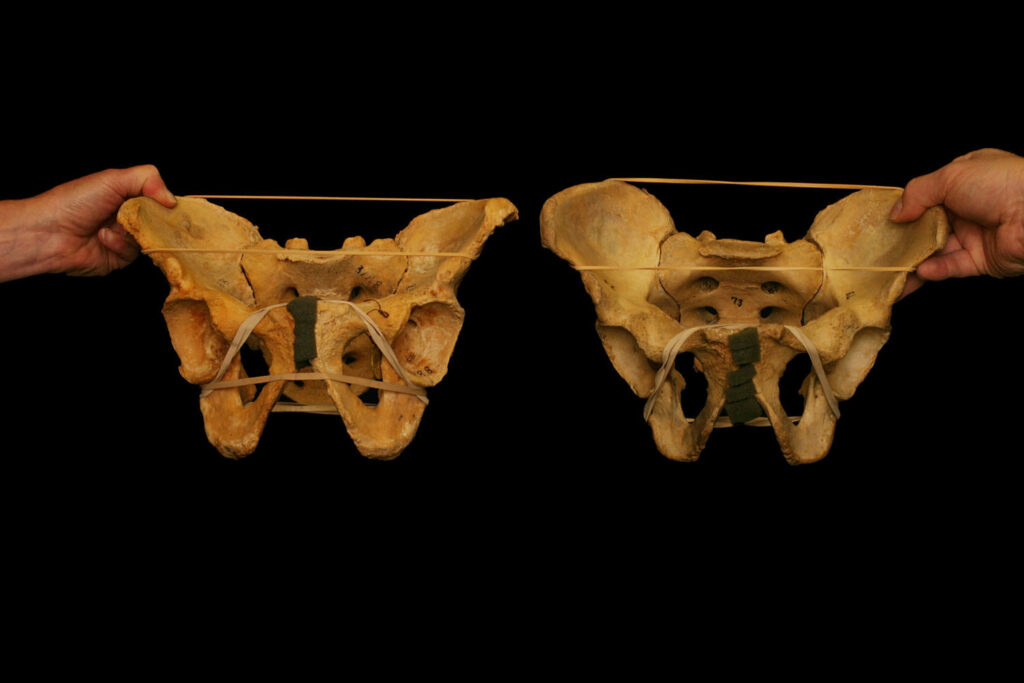
In the image above, there are 2 different pelvises – can you see how the hip sockets point in different directions? This means the range of motion in different directions will be different.
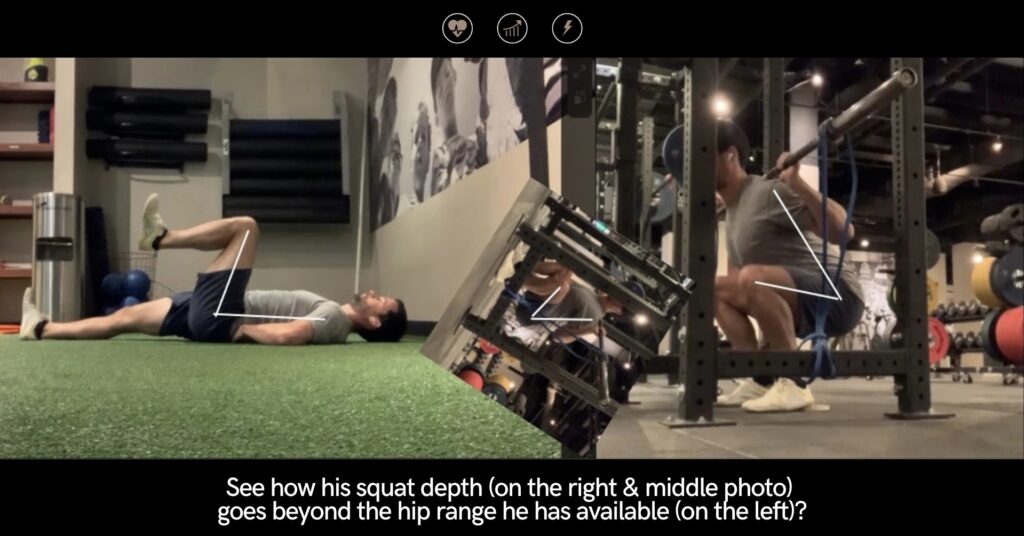
Here’s a test to determine your current ROM:
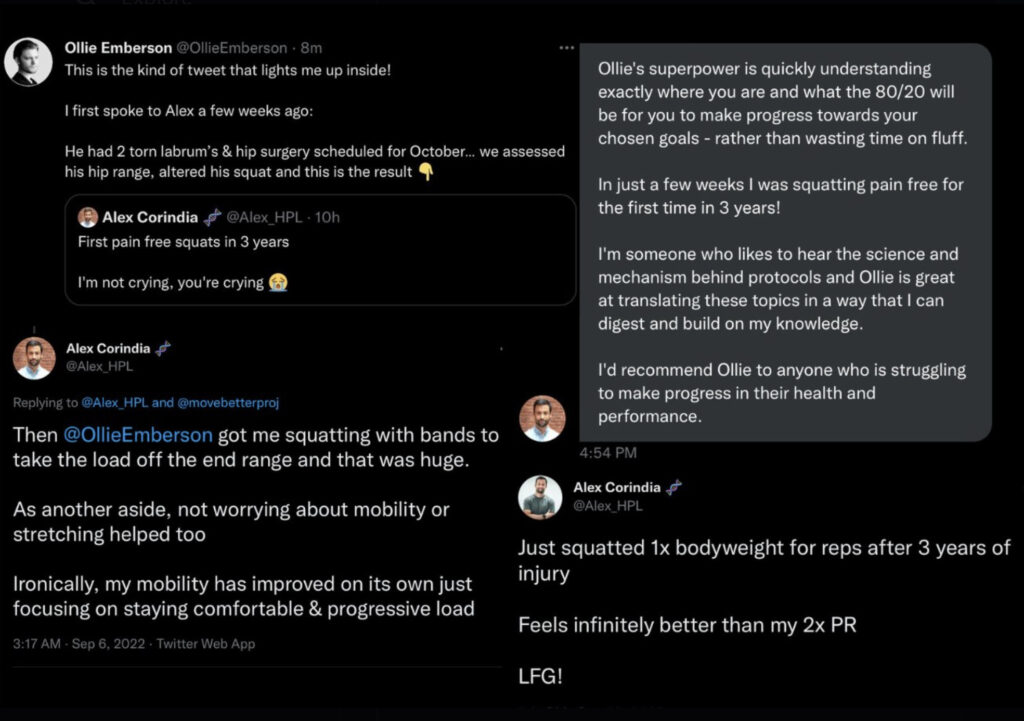
A past client (Alex) is a great example of this. He struggled with hip issues for 2 years (it all started when he tore his labrums paying rugby).
As a result:
He hadn’t been able to squat or deadlift at all for 2 years.
I got him squatting with confidence in 3 weeks.
#4) THE DEADLIFT
This is similar to the point above – you also need to be aware of your hip range on deadlifts too.
Use the test above to identify the hip range you have, and then RESPECT it when you do your deadlifts.
How? Like This:
Use blocks to lift the bar so you start off in less hip flexion (see below for an example of how I do it)…
FIN.
To recap this article, not everyone should:
1) Do chin ups
2) Bench bar to chest
3) Squat ass to grass
4) Deadlift from the floor
Anatomy is unique, which means your range of motion is unique too. Will some people disagree? Sure. But only those who ignore the mechanical (and objective) realities of the body.
Now… what if it’s too late?
If you’ve already been misled by this rules and you’re experiencing tightness, joint pain, training ‘tweaks’ or flare ups in your training…
DM me “HELP” on Instagram,
And we’ll have a chat to see what’s holding you back, and how to resolve it.
Have a great week 🙂
— Ollie E.